Literature Review
 De Zee-Monsters - publisher widow Gijsbert de Groot, 1692 - 1717 - Rijksmuseum - CC0 1.0
De Zee-Monsters - publisher widow Gijsbert de Groot, 1692 - 1717 - Rijksmuseum - CC0 1.0
Different sources were helpful for this report, and the research can usefully be divided into academic, theory-based research (generative and aleatory music grouped under the meta-category of algorithmic music) and research focusing on media and publications that fit the form of the release version of The Aquatic Museum (TAM) app. The final form of the app will be a hand-drawn three-minute video clip with an evolving, changing title song, The Souvenir Shop.
Focusing solely on adaptive audio and music as used in the TAM video app could have filled this research (e.g., for an application of a game audio engine1 in theater), but I was more interested in exploring one of the trademarks of music found in video games: random and chance features also found in music-making software and apps—a characteristic I also explored in my teaching research in Part II on this website.
The TAM app is based on Astrid Rothaug’s original short animated film and follows a linear timeline with timed interactions that influence the music. It can also be tied to experiments in film (e.g., interactive Netflix shows). The TAM app is in fact only one element of the TAM album release—a three-minute teaser that provides insight into the creative process and offers different perspectives2 on the same song.
Swift, S. (2018). FMOD, an Audio Engine for Video Games, Adapted for Theater. The 59th Annual USITT Conference. ↩︎
For an original approach, cf. Beck’s 2012 album, released only as sheet music and left to fans to perform. ↩︎
“Though I may have the pleasure of discovering musical processes and composing the musical material to run through them, once the process is set up and loaded it runs by itself.” in Schwarz, K. R. (1981). Steve Reich: Music as a Gradual Process Part II. Perspectives of New Music, 225–286.1
Steve Reich’s quote summarizes the essence of generative music as discovering musical processes and then letting the system run by itself. Randomness is one of the process elements that enters into the equation.
“I truly believe that our grandchildren will one day say to us: do you mean you really listened to the same piece over and over again?” Brian Eno (1996)2
“I’ve always been lazy I guess. So I’ve always wanted to set things in motion that would produce far more than I had predicted” (Brian Eno 1996)
Brian Eno’s career3 spans a long musical arc, from the seventies (as co-founder of Roxy Music) to today’s innovative multimedia projects. I’m going to focus on his contributions to algorithmic music and his links with Steve Reich. He has been at the forefront of creating and releasing music in different formats that allow the listener to experience the nonlinearity of generative music.
It’s worth quoting Brian Eno, the musician who owns the domain name generativemusic.com and coined4 the term, from a 2010 interview5 in The Guardian:
“I came out of this funny place where I was interested in the experimental ideas of Cornelius Cardew, John Cage and Gavin Bryars, but also in pop music. Pop was all about the results and the feedback. The experimental side was interested in process more than the actual result – the results just happened and there was often very little control over them, and very little feedback. Take Steve Reich. He was an important composer for me with his early tape pieces and his way of having musicians play a piece each at different speeds so that they slipped out of synch. But then when he comes to record a piece of his like, say, Drumming, he uses orchestral drums stiffly played and badly recorded. He’s learnt nothing from the history of recorded music. Why not look at what the pop world is doing with recording, which is making incredible sounds with great musicians who really feel what they play. It’s because in Reich’s world there was no real feedback. What was interesting to them in that world was merely the diagram of the piece, the music merely existed as an indicator of a type of process. I can see the point of it in one way, that you just want to show the skeleton, you don’t want a lot of fluff around it, you just want to show how you did what you did. As a listener who grew up listening to pop music I am interested in results. Pop is totally results oriented and there is a very strong feedback loop. Did it work? No. We’ll do it differently then. Did it sell? No. We’ll do it differently then. So I wanted to bring the two sides together. I liked the processes and systems in the experimental world and the attitude to effect that there was in the pop, I wanted the ideas to be seductive but also the results.”
Steve Reich’s tape works directly influenced6 Brian Eno and led him to explore and establish the principles of ambient music. He “became interested in creating musical systems that produced music of infinite length that never repeated itself rather than linear works that had a fixed structure and time frame”.7 The company SSEYO was founded in 1992 and developed Koan, a generative music engine. Brian Eno received a copy in 1995, which led him to coin the term “generative music”.
Generative music falls under the larger category of algorithmic music. An algorithm can be understood as a well-defined set of operations or rules, but “algorithmic music” extends to:
“a rich field of activity, defined by the urge to explore and/or extend musical thinking through formalized abstractions. In the process of making music as … algorithms, we express music through formal systems of notation, taking a view of music as the higher order interplay of ideas.” 8
Minimal music from the 1960s by Glass and Reich is algorithmic in nature, although manually composed and with a defined start and end point (e.g., Clapping Music, Piano Phase). Ligeti’s Continuum for harpsichord (1968) uses “rigorous algorithmic procedures” on pitch and rhythmic structures “permitting complex rhythmic juxtapositions and transformations”.
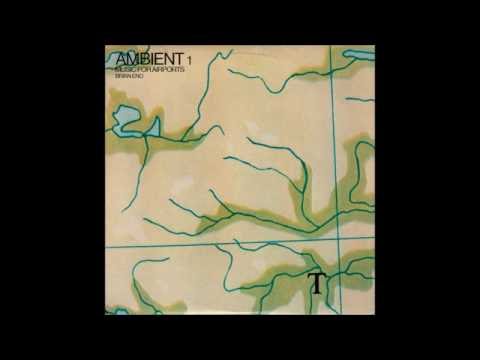
“I worked on things like [algorithmic music] for a while: Music for Airports and Discreet Music were examples, but what they represented were recordings of these processes in action. What I really wanted to do was to be able to sell the process to somebody, not just my output of it.” (Brian Eno, Dredge 2012)
The back cover of the Discreet Music LP features an elaborate drawing of the tape delay methodology:

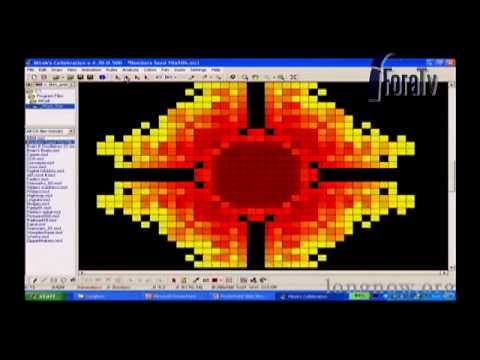
Brian Eno released this music on a floppy disk for the Koan Pro system in 1996.
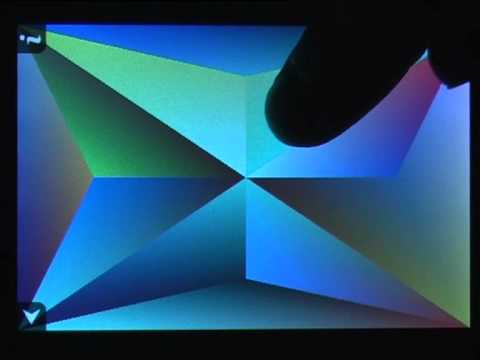
The following apps released for iOS (and some for Android) seem like the logical answer to the difficulties of distributing algorithmic, generative, ever-changing music on a physical medium. Fixing them on vinyl or CD was always a dead end. In “Algorithmic Music for Mass Consumption and Universal Production,”9 Yuli Levtov states that distribution is the main challenge for algorithmic music in reaching a larger public, or in some instances any public at all. Brian Eno, in collaboration with Peter Chilvers, released several generative apps allowing users to influence different generative parameters.
In the methodology section, the reader can find examples of generative and semi-generative music I created and can further explore the distinction and links between adaptive audio and generative music.
“Aleatoric music, or aleatory music or chance music (from the Latin word alea, meaning dice) is music in which some element of the composition is left to chance.”10

“the pool of possible outcomes is so large that any waltz you generate with the dice and actually play is almost certainly a waltz never heard before. If you fail to preserve it, it will be a waltz that will probably never be heard again”.10
Uses an ancient Chinese text (the I Ching) to generate random numbers for tempo, dynamics, and note duration.
Nineteen musical fragments that can be played in any order; the musician can start with any fragment.
It uses physical and mathematical principles and is an example of what Xenakis called stochastic music.
Riley suggests “a group of about 35 is desired if possible but smaller or larger groups will work”. Consisting of a series of short melodic fragments, In C is often cited as the first minimalist composition.
Schwarz, K. R. (1981). Steve Reich: Music as a Gradual Process Part II. Perspectives of New Music, 225–286. ↩︎
brian-eno.net for recent ambient music projects; generativemusic.com for his apps developed together with Peter Chilvers. ↩︎
Brown, P. (2005). Is the Future of Music Generative? Music Therapy Today (Online), 6, 215–274. ↩︎
Morley, P. (2010). On gospel, Abba and the death of the record: an audience with Brian Eno. The Guardian. https://www.theguardian.com/music/2010/jan/17/brian-eno-interview-paul-morley (highlights are mine) ↩︎
Dean, R. T. (2018). The Oxford Handbook of Algorithmic Music. Oxford University Press. ↩︎
ibid. p. 223 ↩︎
ibid. p. 4 ↩︎
ibid. p. 21 ↩︎
Gardner, Martin. The Colossal Book of Mathematics: Classic Puzzles, Paradoxes, and Problems: Number Theory, Algebra, Geometry, Probability, Topology, Game Theory, Infinity, and Other Topics of Recreational Mathematics. New York: W.W. Norton and Company, Inc., 2001. Print. ↩︎ ↩︎
Besides music games, there is a specific category of music-centric apps, software, and installations that target either the music consumer or the music producer. Those projects serve as vehicles for band promotions, CD releases, or artistic creations by artists. These are the ones most relevant to my research, although some of their features focus more on generative music and soundscape design.
Among the music apps released by musicians, Björk’s projects stand out—one is an application linked to an album but also designed as a creative tool for making music with the sounds from the album.
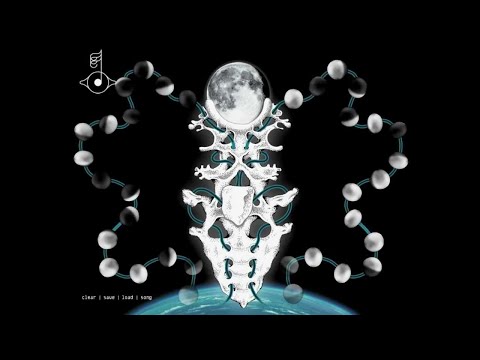
Biophilia was released in 2011 for Android and iOS and is described as follows:
“Biophilia is an extraordinary and innovative multimedia exploration of music, nature and technology by the musician Björk. Comprising a suite of original music and interactive, educational artworks and musical artifacts, Biophilia is released as ten in-app experiences that are accessed as you fly through a three-dimensional galaxy that accompanies the album’s theme song Cosmogony. All of the album’s songs are available inside Biophilia as interactive experiences: Crystalline, Virus, Moon, Thunderbolt, Sacrifice, Mutual Core, Hollow, Solstice, and Dark Matter.”
Features:
Björk: Solstice is a standalone app from the Biophilia suite:
“At the center of the app is a sun from which the user pulls rays of light to form a circular harp of strings plucked by colorful orbiting planets; tilt the device and the orbital planes turn into the branches of a three-dimensional Christmas tree, the stars becoming snowflakes. In Solstice, Björk plays the “Solstice” song with a specially commissioned pendulum-harp which embodies the idea of gravity that was central to the song’s creation.”
There was no follow-up to these projects, and the last one, a VR recording, dates back to 2015:
First released as an app, this clip can now be seen on YouTube:
This app by Ninja Tune made headlines in 2013 because it offered an easy and playful way to interact with the electronic compositions of different artists:
Because of the choice to use a hand-drawn animated video clip, it’s worth providing a few examples of hand-drawn games and apps, although this doesn’t strictly fall within the scope of this research (cf. further references and examples of the difficulties1 of mixing hand-drawn and digital art).