Subsections of Form
Blues Turnaround
Typical Turnarounds on Rhythm Changes or Blues Form
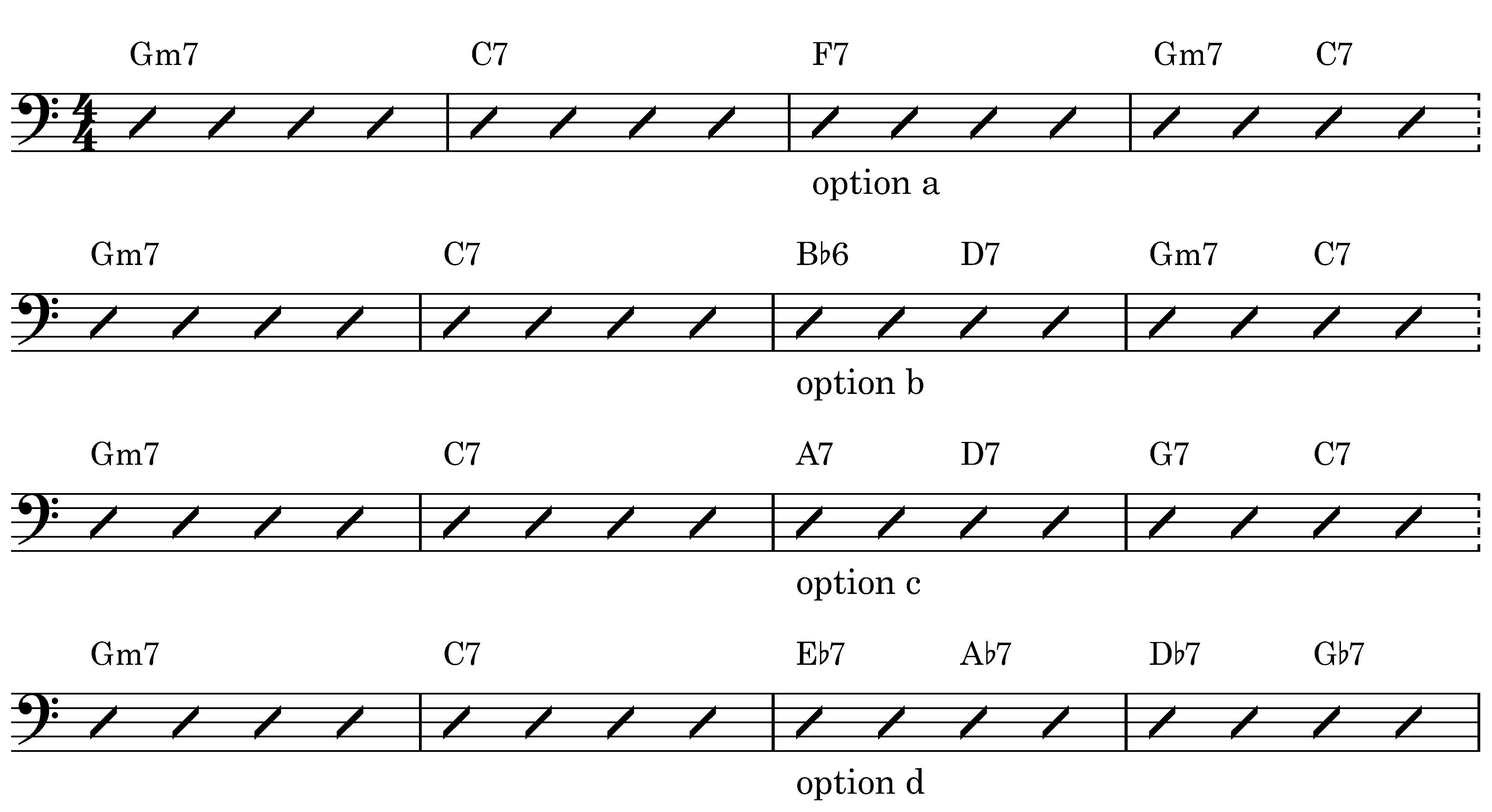
Here are four patterns (a, b, c, d) used in bars 9–12 of a typical F jazz blues:
Randomized Turnaround Options
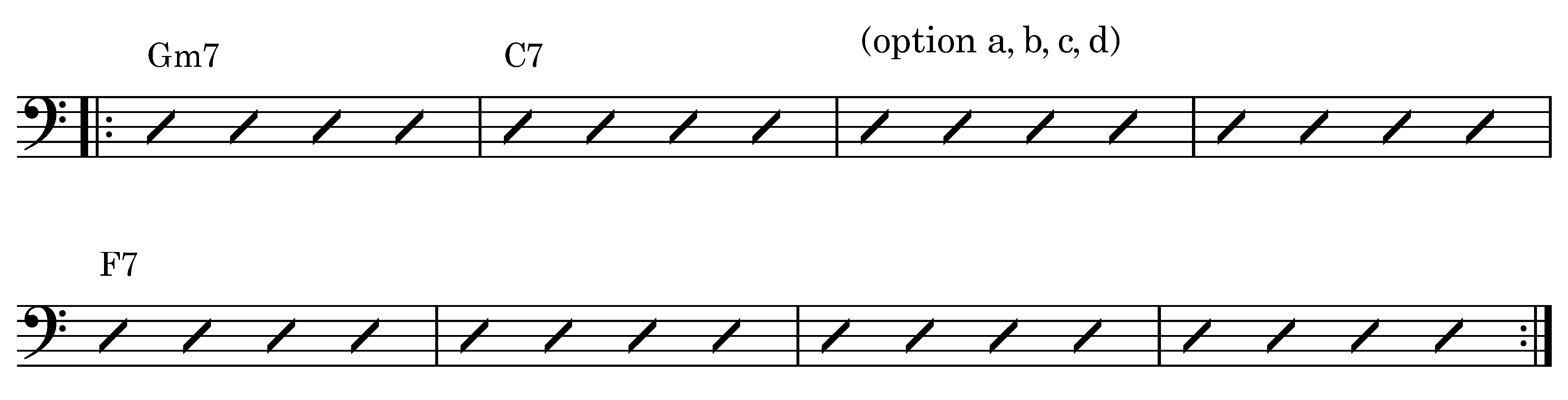
The following playback will select one of the four options by chance. The 8-bar piano part is underlaid with a 6-bar drum groove grouped in sections of 2 bars each, with loops randomly picked from 4 options. This creates additional layers of variation.
Objectives
Here again, the basic principle is an audio flashcard. Students of different levels can focus on specific things:
- recognize the changes as quickly as possible
- sing along
- learn one option at a time
- master all the changes and force yourself to pick one in advance and play it even when recognizing another option. This is an interesting exercise and will help students think less rigidly about harmonic forms—for example, a student plays option d while hearing c, which functions as a subV.
Rhythm Changes
Chord Change Variations Over a Rhythm Changes Form in the B Section
Many jazz tunes use the rhythm changes harmonic progression as a base template. The B section is a playground for different1 reharmonizations.

Here is an audio example of the three options, preceded by four bars over Bb6:
Randomized Versions
This is a variation of the blues turnaround memorization exercise. Each option (a, b, or c) is played twice. This allows the student to hear the progression once and then repeat it, or at a later stage, play each option two times.

-
Thanks to WDR bass player and teacher John Goldsby for option c. ↩︎